
SMARTair vs Aperio: Which Access Solution Fits Your Doors? (UK Guide)
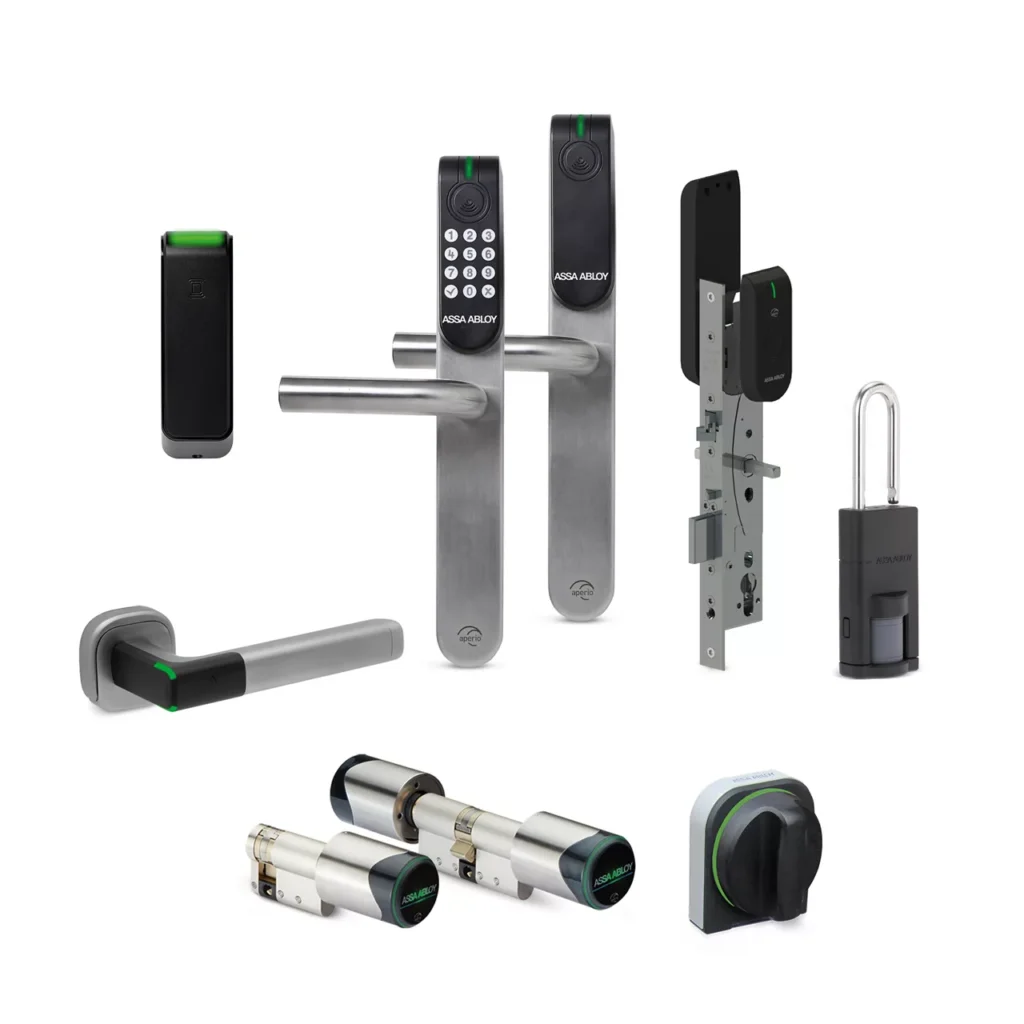
If you’re upgrading access control, ASSA ABLOY SMARTair and Aperio are two well-known options used across commercial and multi-door environments. The “best” choice depends on how many doors you have, how you manage users, what existing systems you run, and—crucially—your door fundamentals (alignment, closing, latching and hardware condition).
This guide explains the practical differences, typical use cases, reliability considerations and what to check before choosing. If you’re based in Telford, Shrewsbury or the wider West Midlands, we can advise after a quick door-by-door assessment.
Quick answer: If you want a flexible access system designed around straightforward door management and scaling across multiple doors, SMARTair is often the better fit. If you need wireless locking devices that integrate with many access control platforms while keeping door wiring minimal, Aperio is usually the stronger option.
This SMARTair vs Aperio guide explains the key differences and which option fits your doors best.
What is SMARTair?
SMARTair is an access control solution typically used for managing multiple doors with credentials (cards/fobs/mobile depending on setup), permissions and schedules. It’s often chosen when you want a structured system to control and manage access across a building or site.
In practice, SMARTair is commonly used for:
- multi-door office environments
- small-to-medium commercial sites
- managing staff/contractor access and schedules
- expanding access control without overcomplicating the setup

What is Aperio?
Aperio is a wireless locking technology that can be used to bring doors into an access control system with minimal door wiring, often through integration with access control platforms. It’s widely used where wiring each door is difficult or disruptive.
In practice, Aperio is commonly used for:
- retrofits where cabling routes are limited
- internal doors in occupied buildings
- sites needing integration with existing access control systems
- scaling access control while reducing door-by-door wiring work
The most important factor: Door fundamentals
Before choosing either solution, confirm the basics. Many “system faults” come from door issues:
- door alignment and hinge wear
- consistent closing (door closer performance)
- latching reliability (especially for latch-based hardware)
- correct fitting and fixings (movement causes repeat faults)
- stable power and clean installation standards
If the door isn’t mechanically sound, no access control technology will behave consistently.
SMARTair vs Aperio: key differences (plain English)
1) Best-fit use case
- SMARTair: structured multi-door access management as a system
- Aperio: bring doors into access control with minimal wiring, often via integration
2) Integration approach
- SMARTair: typically deployed as an access system solution with its own management model
- Aperio: often used as a technology layer to integrate wireless locks with access platforms
3) Retrofit friendliness
- SMARTair: strong for planned upgrades and scalable deployments
- Aperio: particularly strong where wiring doors is disruptive or difficult
4) Ongoing management
Both support permissions and credentials, but the best option depends on your operational needs:
- How frequently users change
- whether you need schedules
- How many doors need control
- How you handle contractors/temporary access
5) Reliability and maintenance
Both can be reliable when installed correctly, but common issues usually come from:
- door misalignment and poor closing
- incorrect hardware selection for door type
- power/installation standards
- delayed maintenance (including device/lock checks)
6) Scaling to more doors
- SMARTair: typically scales well in planned multi-door designs
- Aperio: scales well where you want to reduce door-by-door wiring complexity
7) Cost drivers
Costs depend less on the brand and more on:
- number of doors
- door condition (fundamentals)
- required hardware per door
- any integration needs
- installation complexity and access constraints
Which one should you choose?
Choose SMARTair if:
- you want a structured, scalable access system for multiple doors
- you need clear management of users, permissions and schedules
- you’re planning a rollout across offices or small commercial sites
- you want a straightforward system approach with predictable expansion
Choose Aperio if:
- you need wireless locking that integrates with an access platform
- wiring each door is difficult or too disruptive
- you’re upgrading an occupied building where minimal disruption matters
- you want to bring more doors under control with cleaner cabling requirements
If you’re unsure, a short door survey usually makes the decision obvious.
If you’re deciding between SMARTair vs Aperio, a short door survey usually confirms the right fit.
Common mistakes to avoid
- choosing technology before checking door fundamentals
- ignoring door closer issues (doors not closing = repeat faults)
- poor fixings that allow movement over time
- not planning how users will be managed day-to-day
- underestimating power/integration requirements
- no maintenance plan for multi-door estates
FAQs
Can SMARTair or Aperio be used on any door?
Not always. Door type, hardware condition, closing/latching, and fire door requirements all influence suitability.
Which is better for a retrofit in an occupied building?
Often Aperio, because it can reduce disruption by minimising door wiring—but it depends on the door set and system requirements.
Do these solutions need maintenance?
Yes. Planned checks help prevent repeated faults, especially where doors are heavily used and alignment changes over time.
Do you offer surveys and installation support?
Yes. We can assess doors, recommend the most practical option, and support installation, upgrades, maintenance and fault finding.
Need help choosing the right access solution?
If you’re in Telford, Shrewsbury or the wider West Midlands, we can assess your doors and recommend the most suitable approach for long-term reliability and practical day-to-day management.
Ready to get started? Contact us to request a quote or speak to an engineer.